

Before accepting a hotshot load: the booking checklist.
Accept only after the business/contact, freight, equipment, access, schedule, complete-mile costs and written terms are clear enough to execute. Record a missing fact as unresolved instead of pricing it as though it were confirmed.
Verify the parties before trusting the confirmation
Check the registered business separately from the person offering the shipment. Confirm the specific load through an independently verified contact and preserve the original message. A familiar logo or active authority record does not authenticate a changed email, phone number or payment instruction. Use the broker verification guide for that decision; this page covers the rest of acceptance.
Match the freight to the whole combination
Obtain the commodity, dimensions, weight, number of pieces, loading method and any special handling or cargo requirements. Compare them with the verified truck/trailer/component capability, available deck/access and cargo-specific securement needs. Do not accept an unknown weight as a light load. Obtain competent help for an uncertain securement or equipment condition before committing.
Check pickup, delivery and the time between them
Confirm actual appointment or operating windows, facility contact, entrance/loading access, assistance and any restrictions relevant to your pickup and trailer. Include travel, checks, loading, waiting, fuel and a primary/backup stop in the plan. A mapping ETA is not confirmation that the schedule fits the driver’s applicable hours or that the entrance accepts the combination.
Calculate on the same complete-mile basis
Record empty miles to pickup, loaded miles and expected repositioning after delivery. Use your own cost model and a less favorable fuel or delay case. Keep revenue, modeled costs and excluded owner pay/taxes/reserves separate. A high loaded-mile quote can still be weak across all the miles and time the job ties up. The linked cost and fuel guides own those calculations.
Put the commercial conditions beside the load facts
Confirm the agreed amount, payment/submission instructions, document requirements and any accessorial conditions. For detention, ask for the start event, included time, rate, increments, caps, notice and approval requirements. Identify who may authorize changes. Keep the written confirmation and subsequent authorized changes together; a proposed accessorial request is not guaranteed pay.
Use an accept / clarify / pause record
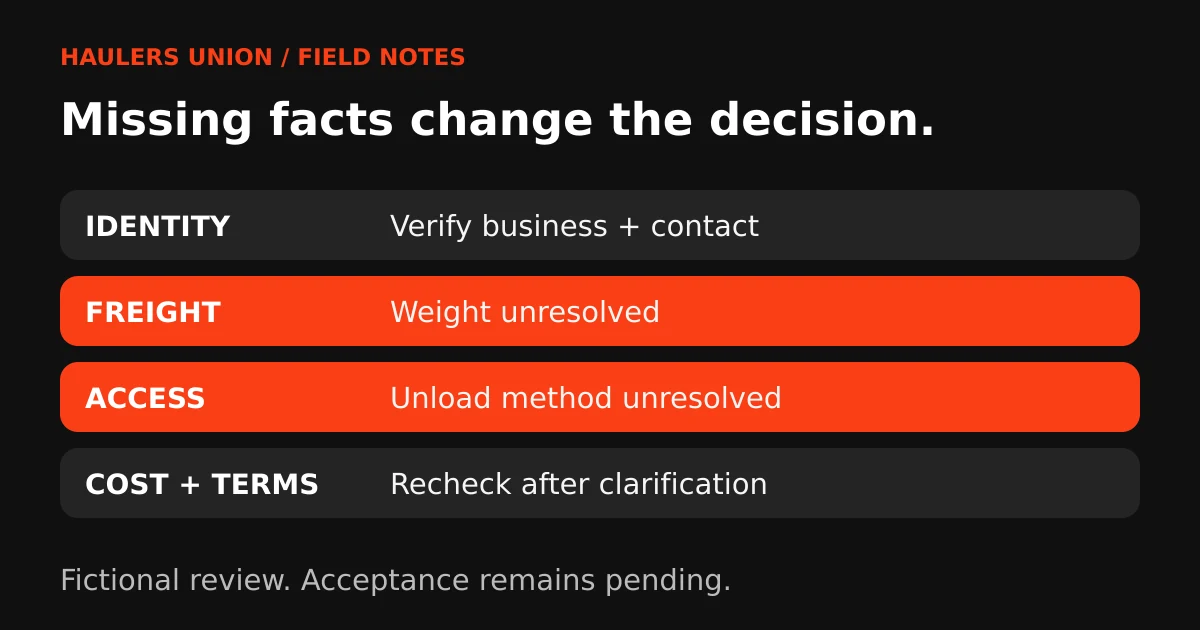
Fictional review: the offered shipment has dimensions and pickup time, but the weight and unloading method are missing. Mark those two fields unresolved and request confirmation through the verified contact. Do not fill them with typical values. Once clarified, recheck equipment, time and cost before accepting. If identities or instructions conflict, pause and preserve the evidence rather than treating an increased rate as the answer.
| Field | Example status | Next decision |
|---|---|---|
| Business and contact | Not assessed in this example | Verify both independently |
| Dimensions / pickup window | Supplied; still check against the plan | Confirm equipment, access and timing |
| Weight | Unresolved | Obtain verified weight before equipment decision |
| Unloading method | Unresolved | Confirm facility method and responsibilities |
| Rate / terms / change authority | Not supplied in this example | Obtain written terms; do not assume |
| Acceptance | Pending | Recheck the complete load after clarification |
Original HU editorial text · reviewed 2026-11-04. Sources are linked for verification; no third-party article is republished.
Use the same booking checklist every time.
- Verify one counterparty using an independent contact channel.
- Review a sample confirmation with the booking checklist.
- Calculate revenue per total mile, including deadhead.
Sign in to save learning progress.
Progress is private to your account.
Before you commit to the load
Verify the broker and keep the original records with your booking notes.
Open the broker checklistHelp the editorial team see what needs more context.
What would you add from experience?
A detail from the road can make the starting point more useful.