

Hotshot safety audit: organize the evidence.
Organize the records that apply to your operation, identify what is missing and follow the assigned auditor’s current instructions. A folder checklist can expose gaps; it cannot guarantee that a new-entrant safety audit will be passed.
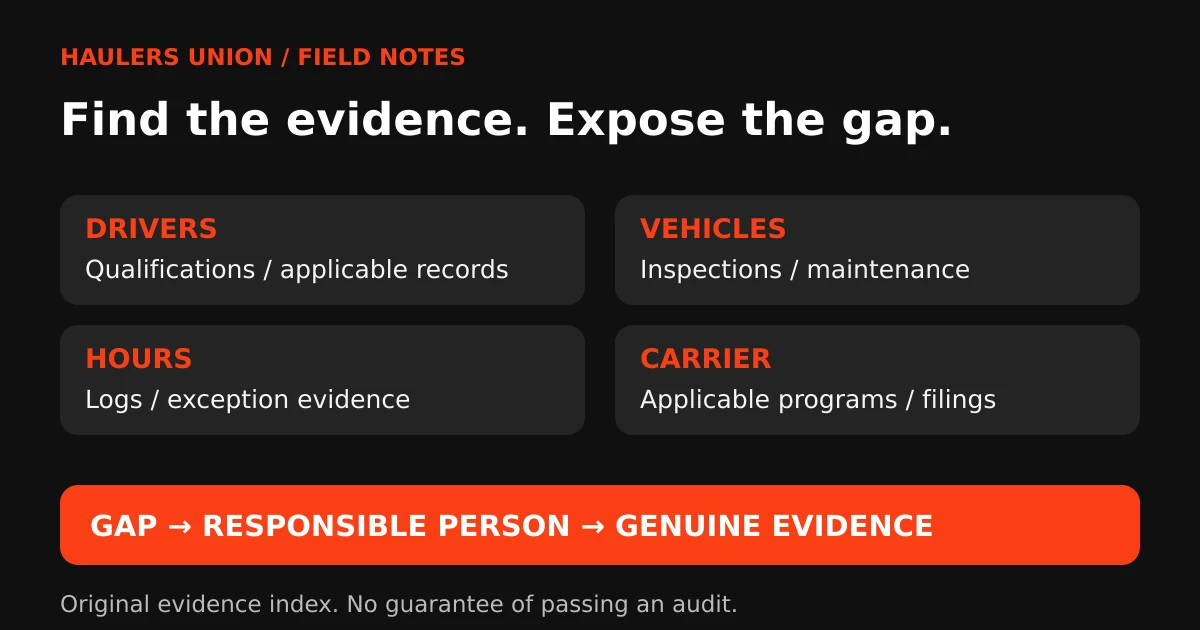
Confirm the program and the actual request
FMCSA describes an initial 18-month new-entrant monitoring period and a safety audit within the first 12 months of operations in its program guidance. Confirm the notice, scope, period and submission method for your property-carrier operation with the assigned auditor. Keep registration contact information current. Do not wait for an audit notice to begin maintaining required records.
Build an evidence index, not a pile of files
Use one row per applicable record group: source requirement, covered driver/vehicle/period, file location, person responsible, last check and open gap. FMCSA’s linked Safety Audit Resource Guide identifies document groups an auditor may request. It also contains older material, so use it as an organizing reference with current regulations and the auditor’s instructions rather than copying every historical procedure.
Keep driver and vehicle records in the right scope
Identify the actual drivers, licenses/qualifications and applicable medical or other supporting records. Separately organize vehicle identification, inspections, maintenance and repair evidence. Investigate the scope and exceptions behind each item; “non-CDL” is not a reason to mark every driver or vehicle file unnecessary. Conversely, do not claim every program applies identically to all hotshot operators.
Connect hours records with supporting trip evidence
Retain the records required for the applicable logging method and any exception relied on. Where relevant, reconcile the trip’s dispatch, fuel, toll and delivery evidence with the duty records instead of inventing missing entries. Record how an inconsistency was investigated and corrected through the proper process. A clean file name does not prove a truthful or complete underlying record.
Separate program applicability from an unchecked box
Maintain the applicable financial-responsibility, accident and other program evidence. Determine drug/alcohol testing applicability from the actual operation and driver requirements; do not enroll or omit a program solely because another pickup operator did. For each “not applicable” entry, keep the facts and rule basis supporting that answer. Ask qualified compliance help or the auditor when the applicability is unclear.
Find a record as if it had just been requested
Select an actual trip, driver and vehicle period and retrieve the supporting evidence from the index. Check completeness, dates, legibility and the relevant retention rule. Set a responsible person and a due date for each gap. Resolve safety deficiencies before operating and follow any out-of-service restrictions. Do not create a backdated record to make an incomplete file look finished.
Protect the file and close the loop
Keep private driver, medical, identity and shipment documents in an appropriately controlled system with recoverable backups. Use only the verified submission instructions for the requested audit. If an official finding requires corrective action, follow the actual notice and deadline. This editorial workflow supplies neither a compliance certification nor a promise of passing.
| Record group | Track | Verify before submission |
|---|---|---|
| Driver | Applicable qualification/license/medical evidence | Person, period, current requirement and access |
| Vehicle | Identification, inspections, maintenance/repairs | Correct equipment and resolved deficiencies |
| Hours | RODS/time records and exception evidence | Applicable method and supporting trip records |
| Carrier/program | Applicable insurance, accident and testing evidence | Documented applicability, not assumptions |
| Gap log | Missing item, responsible person and action | Resolved with genuine evidence; no backdating |
Original HU editorial text · reviewed 2026-11-04. Sources are linked for verification; no third-party article is republished.
Build a small, retrievable safety record system.
- Work through the FMCSA New Entrant training.
- Prepare one realistic dispatch day with a parking backup.
- Retrieve one complete sample operating-day record without searching across messages.
Sign in to save learning progress.
Progress is private to your account.
Help the editorial team see what needs more context.
What would you add from experience?
A detail from the road can make the starting point more useful.